Analytics Pipelines Fueling Multi-Leg Bet Outcomes in Soccer Competitions and Racing Events
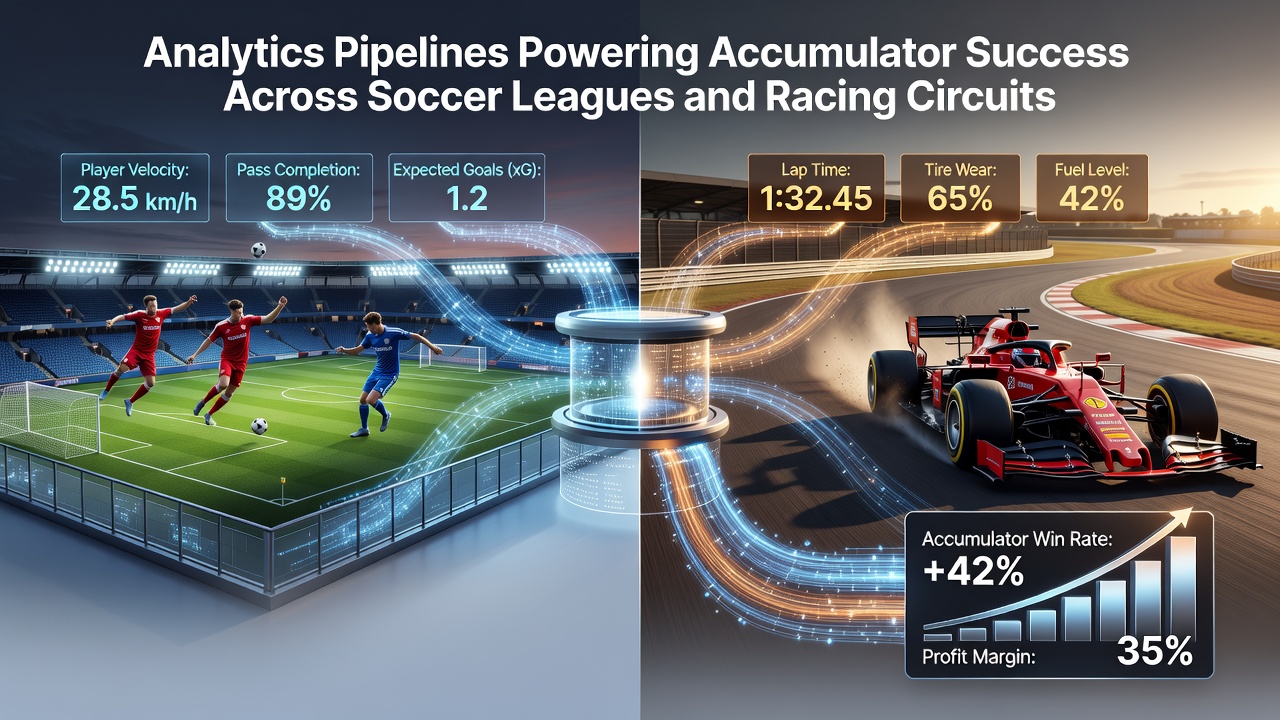
Data pipelines have become central to how operators and analysts manage the complexity of accumulator bets across soccer leagues and racing circuits because these systems collect raw inputs from multiple sources then transform them into usable models for odds and risk assessment. In practice one pipeline might pull live match statistics from leagues in Europe and South America while another ingests performance metrics from thoroughbred and harness events at tracks in Australia and North America then both streams merge into unified datasets that support multi-leg selections.
Data Ingestion Layers Across Sports
Modern pipelines begin with ingestion stages that capture structured and unstructured information at high velocity. Soccer sources include player tracking systems, team formations, and weather variables whereas racing circuits contribute gate speeds, track conditions, and historical form data. These inputs arrive through APIs, sensor feeds, and public records then enter staging areas where validation routines remove duplicates and flag anomalies before further processing occurs.
July 2026 saw several major soccer leagues integrate enhanced GPS tracking standards that increased data granularity by roughly twenty percent compared with the prior season according to reports from the European Gaming and Betting Association. Racing authorities in Ireland and Canada simultaneously upgraded timing equipment at key venues which fed more precise split times into analytics platforms used by betting operators.
Transformation and Modeling Stages
Once data lands in the pipeline it undergoes cleaning, normalization, and feature engineering. Engineers apply transformations that convert raw numbers into variables such as expected goals per minute or average sectional times adjusted for track bias. Machine learning components then generate probability distributions for individual legs of an accumulator which operators combine to calculate joint probabilities for the full multi-leg ticket.
Researchers at the University of Sydney documented how ensemble models trained on five years of racing data improved prediction accuracy for quinella and trifecta style accumulators when pipelines incorporated both local and international race results. Similar approaches in soccer have allowed platforms to adjust accumulator odds dynamically during live matches by feeding updated possession and shot metrics back through the same transformation layers.

Integration with Risk and Payout Systems
After modeling completes the outputs move into risk management modules that monitor exposure across thousands of active accumulators. These modules compare predicted versus realized probabilities in near real time and trigger alerts when certain legs exceed predefined thresholds. Payout engines then reference the same pipeline outputs to determine final settlement amounts once all legs conclude.
Operators in Nevada and several Australian states have adopted shared pipeline frameworks that allow cross-sport accumulator products to draw from unified data lakes rather than maintaining separate silos for soccer and racing. This consolidation reduces latency between event completion and settlement which in turn supports higher volumes of multi-leg wagers without proportional increases in operational staff.
Scalability and Regulatory Considerations
Scalability demands that pipelines handle peak loads during major events such as the English Premier League weekends or the Melbourne Cup carnival. Cloud-based orchestration tools automatically scale compute resources while maintaining data lineage records that regulators require for audit purposes. Authorities in New Jersey and the Australian Capital Territory have issued guidelines emphasizing transparent model documentation which many operators satisfy by exposing pipeline metadata through secure portals.
Those who maintain these systems note that redundancy across geographic regions helps prevent single-point failures during high-traffic periods. Redundant ingestion nodes in both Europe and Asia ensure that soccer data from evening fixtures continues flowing even if one regional hub experiences disruption.
Conclusion
Analytics pipelines now underpin the operational backbone for accumulator products in soccer leagues and racing circuits by connecting raw event data to refined probability models and settlement processes. Continued investment in ingestion speed, transformation accuracy, and cross-jurisdictional integration indicates these systems will remain essential as operators expand multi-leg offerings into additional markets and sports.