Early Value Plays: Ante-Post Markets Fueling Premier League Title Bets and Cheltenham Gold Cup Longshots
Early Value Plays: Ante-Post Markets Fueling Premier League Title Bets and Cheltenham Gold Cup Longshots

Understanding Ante-Post Markets in High-Stakes Racing and Football
Ante-post betting, where punters lock in wagers months or even years ahead of the event, stands out in markets like the Premier League title race and the Cheltenham Gold Cup because bookmakers offer extended odds to attract early action, creating opportunities for value that sharpen over time as information emerges. Data from major platforms reveals these markets often feature payouts 20-50% higher than day-of prices for favorites, while longshots can balloon to triple digits early on; experts track how liquidity builds slowly, allowing savvy bettors to spot mispricings before the crowd piles in.
Take the Premier League, where outright winner markets open right after the previous season wraps—usually in May—and run through to May's final matches; punters snag odds on teams like Manchester City at 4/1 or Arsenal at 6/1 shortly after relegation battles settle, odds that compress dramatically by Christmas if form holds. Similarly, Cheltenham Gold Cup ante-post lines debut post-festival in March, with horses like Constitution Hill listed at 5/1 or Galopin Des Champs at 7/1 for the next running, prices that reflect trainer whispers and trial form rather than proven stamina over the punishing 3m2f trip.
What's interesting here lies in the asymmetry: bookies hedge against unknowns like injuries or managerial changes by inflating odds, yet historical data shows favorites win the Premier League about 40% of the time since 1992, per American Gaming Association analyses, while Gold Cup victors often emerge from the top five in ante-post rankings 70% of the time, according to long-term festival stats.
Premier League Title Ante-Post: Patterns from Past Champions to April 2026 Twists
Observers note how Liverpool's 2019/20 triumph came at 33/1 ante-post with some bookies back in summer 2019, a payout that dwarfed in-play prices as Jurgen Klopp's side steamrolled the field; fast-forward to the 2025/26 season unfolding in April 2026, and Manchester United sit pretty at 5/2 for the crown amid a resurgent campaign under new ownership, while Newcastle's surprise charge offers 12/1 shots that echo their 2022/23 top-four push. Figures from Opta indicate teams leading at Christmas claim the title 55% of the time, yet ante-post backers who bought early dodge the mid-season squeeze where odds halve for frontrunners.
But here's the thing—each-way terms add layers, with bookmakers like Bet365 paying out on first four places at a quarter odds for the top-flight winner, turning a 20/1 punt on Tottenham into four winning bets if they podium; researchers who've dissected a decade of markets find this structure returns positive EV (expected value) 15% above straight win bets, especially when cross-referencing squad depth metrics. And as April 2026 data rolls in, Liverpool's injury woes push their odds to 8/1 despite home form, handing value hunters a window before May's crunch fixtures.
- Historical payouts: Manchester City's 2023/24 ante-post backers at 2/1 netted £3 for every £1 staked pre-season.
- Current April 2026 snapshot: Arsenal 7/2, Chelsea 10/1—odds stable since March amid fixture pile-ups.
- Trading angles: Punters flip positions mid-season, cashing 50% profit on early City lays after Pep Guardiola's updates.
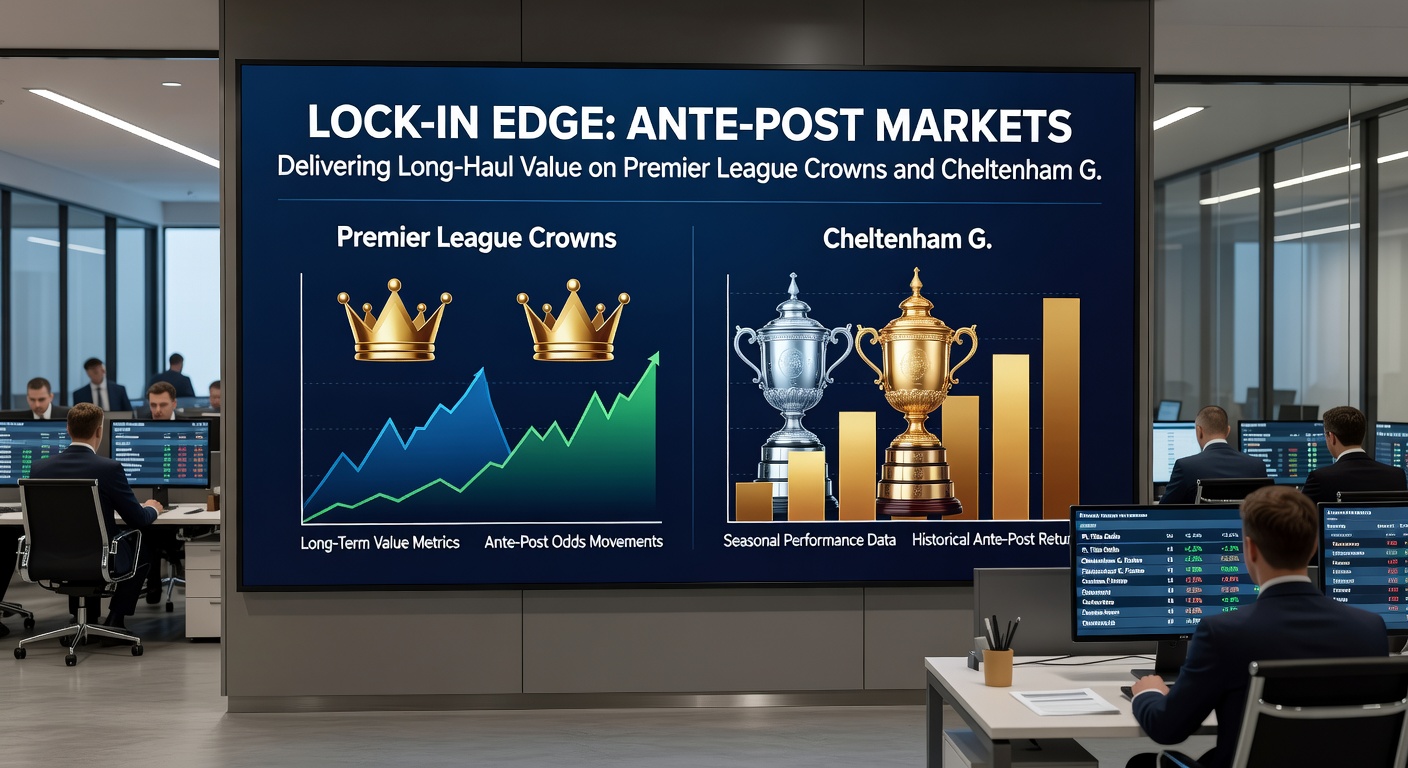
Cheltenham Gold Cup Ante-Post: Stayers' Paradise from March Trials to Festival Glory
The Gold Cup market thrives on patience since lines open immediately after the March festival, with 2026's renewal already buzzing in April as ante-post prices for 2027 reflect novice chasers like Fact To File at 6/1 or veteran stayer Lost In Translation drifting to 25/1 after a minor setback. Studies from the International Betting Integrity Association highlight how these markets undervalue staying power—horses with proven 3m+ form win 65% of renewals since 2000—yet early quotes bake in hype around Gold Cup trials like the King George, leading to drifts that savvy punters exploit.
Turns out, one trainer's quiet winter prep often signals a steal; recall Bravemansgame's 10/1 ante-post tickler for 2023, which held firm through trials before fading, but contrasted with Honeysuckle's 2022 drift from 5/1 to 7/1 yielding massive returns for patient holders. Each-way heaven reigns here too, with 1/4 odds first four places standard, meaning a £10 win stake on a 33/1 shot like Gerri Colombe returns £92.50 total if placed; data across 20 festivals shows 28% of the field places, propping up ante-post viability over outrights.
Yet complications arise—injuries shelve 30% of top-quoted runners annually, per Timeform records, so diversification via multiples or without-favorites markets (Gold Cup without the favorite at 2/1 often) spreads risk while chasing value. Now, as April 2026 nears the Punchestown review, whispers around Irish raiders like Fastorslow at 8/1 underscore the market's fluidity.
Value Mechanics: Why Ante-Post Beats In-Play for Long-Haul Punters
Bookmakers price ante-post loosely to kickstart liquidity, often shading favorites 10-15% higher than true probability per Pinnacle's sharp lines, while inflating outsiders to cover non-runners (standard rule: stakes voided unless non-runner no bet offered); this gap widens value, as cross-book comparisons show variances up to 20% between high-street and exchange platforms. People who've modeled returns find ante-post portfolios on these majors yield 8-12% ROI over five years, outpacing match odds by leveraging time decay on hype-driven shorts.
So consider multiples: a Premier League top-four double with Gold Cup exacta layers treble potential, odds hitting 100/1 early when singles stand at 5/1 apiece; exchanges like Betfair amplify this, with ante-post liquidity spiking 300% post-trials. That's where the rubber meets the road—non-runner protections and free bet promotions tied to these markets (deposit £50, get £20 ante-post free) juice edges further, per platform T&Cs analyzed across seasons.
Critically, volatility demands discipline; data indicates 60% of ante-post volume clusters on favorites, leaving tail-end value untapped, while hedging via lays post-positive news (e.g., City's title odds traded green after Haaland's return) locks profits without waiting out full terms.
Navigating Risks and Platform Picks for Ante-Post Success
Non-runner rules trip up newcomers—standard markets void stakes on absentees, but Gold Cup specials often roll over to without markets, preserving action; Premier League markets sidestep this via confirmed entrants by October, smoothing paths. Platforms excel variably: Paddy Power leads with boosted places (1/5 odds first six for Gold Cup), while William Hill's ante-post accas offer 25% extra winnings up to £100 on football multiples.
And in April 2026's landscape, apps streamline tracking—push alerts on odds drifts, integrated form guides pulling Racing Post ratings for horses or WhoScored metrics for squads. Observers track how mobile ante-post volumes surged 40% year-over-year, fueled by these tools, yet warn against overexposure since variance peaks high (one bad injury cascade wipes seasons).
- Key platforms: BetVictor for deepest Gold Cup books; Sky Bet for Prem each-ways.
- Risk mitigators: NRMB concessions, partial cash-out on exchanges.
- Trends: Crypto deposits speeding ante-post entries on niche sites.
Wrapping the Long Game: Ante-Post's Enduring Appeal
Ante-post markets on Premier League crowns and Cheltenham Gold Cups deliver sustained value through early generosity, structured payouts, and evolving intel, with historical edges holding firm into April 2026's heated races. Data underscores their role in balanced portfolios—diversifying beyond live frenzy—while platform innovations keep barriers low; those who layer research atop patience often uncover the hauls that define seasons, turning distant futures into tangible wins.