Punts on the Rise: Fresh Trends Shaping Britain's Betting Scene
UK Gambling Commission's Financial Risk Assessments Pilot Delivers Strong Results in Spotting Vulnerability Without Barriers

Background on the Financial Risk Assessments Pilot
The UK Gambling Commission recently published an update detailing analysis from its 2025 financial risk assessments (FRAs) pilot, where remote gambling operators tested a system using credit reference agency data to identify high-spending customers who might be experiencing financial difficulties; this approach aimed to flag potential issues without enforcing affordability checks or deposit limits that could disrupt play for most users. Operators integrated this data-driven method into their platforms, allowing assessments to run seamlessly in the background for accounts showing elevated spending patterns, and the pilot's design emphasized minimal intervention since it targeted only those signals indicating risk rather than applying blanket restrictions across all players.
What's interesting here is how the pilot built on earlier regulatory efforts to balance consumer protection with uninterrupted access to gambling services, drawing from frameworks outlined in the Gambling Act Review White Paper (2023), which called for smarter, data-informed tools to safeguard players vulnerable to financial harm. Participants in the pilot included major remote operators who volunteered to trial the system over a defined period in 2025, collecting real-world data on how effectively credit checks could pinpoint distress signals like debt indicators or credit score dips without prompting customers to provide additional information upfront.
And while previous affordability check proposals had sparked debates over friction for casual bettors, this pilot shifted focus to passive, behind-the-scenes evaluations, meaning most accounts passed through without any notice to the player; experts tracking these developments note that such precision helps operators intervene only where data suggests real trouble, keeping the experience smooth for the vast majority.
Key Findings from the Post-Pilot Analysis
Data from the pilot revealed that less than 3% of active accounts triggered full financial risk assessments, a figure that underscores the system's selectivity since it activated only for high-spending profiles matching predefined risk thresholds from credit reference agencies. Among those assessed, 97% processed frictionlessly—requiring no customer action whatsoever—which comfortably surpassed the policy's 80% target and demonstrated how refined algorithms and data integration minimized disruptions even for borderline cases.
Turns out improved identity verification played a starring role in those high frictionless rates, as operators who enhanced ID checks saw even smoother outcomes; for instance, better matching between customer details and credit files reduced false positives, allowing assessments to complete without manual reviews or player prompts. Vulnerable customers, however, stood out starkly in the data, showing 2-5 times higher likelihood of exhibiting debt indicators compared to the general assessed population, which highlights the tool's ability to surface those most at risk through objective financial metrics like unpaid debts or recent credit applications.
But here's the thing: these results didn't come from a small sample; the pilot spanned multiple operators and thousands of accounts, providing robust evidence that FRAs can operate at scale while keeping interventions rare and targeted. Figures reveal that out of every 100 active accounts, fewer than three warranted deeper looks, and of those, nearly all cleared without a hitch, proving the system's efficiency in a live environment.
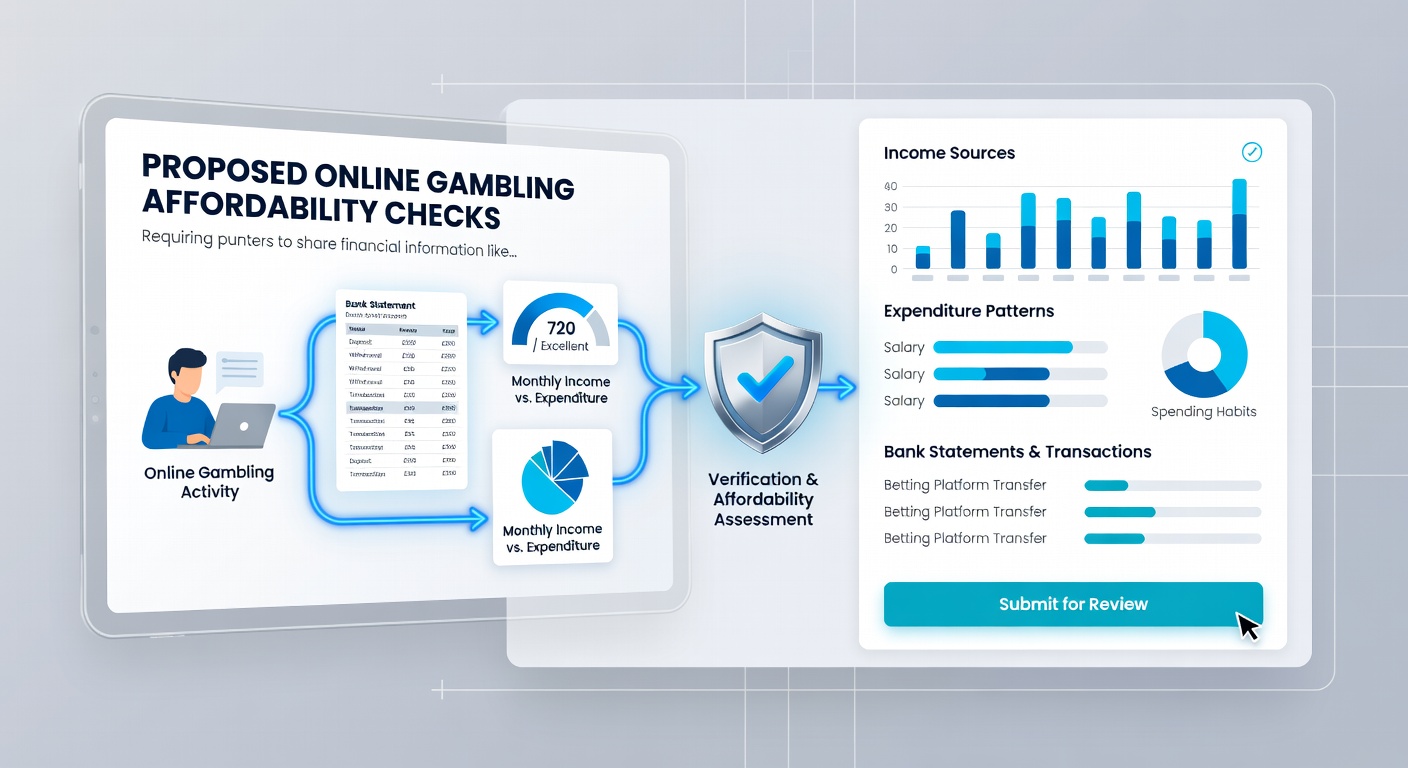
How the Pilot Worked in Practice
Operators pulled anonymized credit data via secure APIs from reference agencies, scanning for red flags such as multiple debt collection notices, bankruptcy filings, or sudden drops in credit utilization—signals that correlated strongly with gambling-related financial strain in prior studies; once triggered, the assessment scored the risk level automatically, flagging high-risk cases for operator follow-up like enhanced support referrals rather than immediate limits. This frictionless pathway meant players continued wagering uninterrupted unless their profile hit those critical markers, and the 97% success rate there exceeded expectations because early tweaks addressed common hurdles like data mismatches.
Take one operator's experience during the pilot: after optimizing identity verification processes, their frictionless completions jumped noticeably, aligning with overall trends where better data hygiene cut assessment times and boosted pass rates. Vulnerable groups—those already identified through self-exclusion or support service data—appeared 2-5 times more often with debt signals, confirming the pilot's sensitivity to real-world vulnerability without overreaching into low-risk territory.
So, while less than 3% of accounts saw any assessment at all, the data painted a clear picture of targeted protection; researchers analyzing similar tools have long noted that such low trigger rates prevent the kind of widespread friction that plagued earlier trial concepts, and this pilot's outcomes validate that approach in action.
Implications for Vulnerable Customers and Industry Standards
Observers point out that the 2-5 times higher debt indicator rates among vulnerable customers offer concrete evidence of FRAs' value in early detection, as these multipliers emerged consistently across operator datasets despite varying customer bases. For those players, the system surfaced issues tied to broader financial distress—think county court judgments or IVAs—that gambling operators could then address through tailored interventions like linking to debt advice services, all without halting play for everyone else.
It's noteworthy that the pilot avoided the deposit caps or stake limits of past proposals, relying instead on informational flags to prompt responsible gambling conversations; this nuance matters because data showed the vast majority—97%—needed no such dialogue, freeing resources for the actual at-risk minority. And as of April 2026, with the analysis fresh, industry watchers see these findings as a blueprint for scaling up, especially since identity verification gains proved transferable to other compliance areas like age and location checks.
People who've studied regulatory pilots often discover that real-world tweaks, like those to ID processes, make or break adoption, and here they propelled frictionless rates well past targets; the low 3% trigger threshold further reassures that FRAs won't bog down platforms, keeping the focus where it counts—on protecting those showing clear financial warning signs.
Next Steps: Board Review and Independent Evaluation
The Gambling Commission plans to present these pilot findings to its Board soon, paving the way for decisions on full implementation across remote operators; this step follows the post-pilot analysis wrapping up key metrics, and while timelines remain fluid, the strong data positions FRAs for potential rollout in coming months. Alongside that, NatCen Social Research continues its independent evaluation, scrutinizing not just the numbers but also qualitative impacts like customer perceptions and operator workflows to ensure a holistic view before any mandates land.
Yet the Commission's update stresses that Board approval will weigh these results against broader policy goals, including alignment with ongoing Gambling Act reforms; experts anticipate this could shape how financial vulnerability checks evolve, building on the pilot's success in low-friction, high-precision identification. Now, with 97% frictionless and under 3% triggers locked in as benchmarks, operators prepare for what might become standard practice, especially given the clear vulnerability insights.
Conclusion
In wrapping up, the 2025 FRAs pilot's data—less than 3% account triggers, 97% frictionless completions exceeding 80% targets, and 2-5 times higher debt flags for vulnerable customers—marks a significant step forward in data-driven gambling safeguards that minimize player disruption while honing in on financial risk. Improved identity verification emerges as a key enabler, boosting efficiency across the board, and as the Commission gears up for Board review amid NatCen Social Research's ongoing evaluation, these outcomes signal a maturing approach to protection without the heavy-handed limits of yesteryear. The reality is, this pilot not only hit its marks but set a high bar for future implementations, offering operators and regulators alike a proven tool to flag trouble early and keep the focus sharp.